-

Calvin posted an update
We are treating Continuous Improvement – one of the most critical drivers of business success – like a technical management problem.
But that math is performed by human beings, and humans do not run on logic; we run on dopamine.
For decades, operational leadership has relied on the threat of a “red box” on an audit to drive 5S and Lean initiatives. We are effectively asking our teams to trade their current comfort for a theoretical future benefit – a benefit that often just makes the business owners richer.
This creates a massive “Gratification Gap.”
When the reward for hard work is delayed by months, the human brain decouples the effort of improvement from the pleasure of success. Lean simply starts to feel like extra work.
If you rely solely on negative reinforcement, you are not building a culture of excellence; you are building a culture of mere compliance. It is the management equivalent of forcing your team to run a marathon while poking them with a stick. Eventually, they will stop running, find a bigger stick, and fight back.
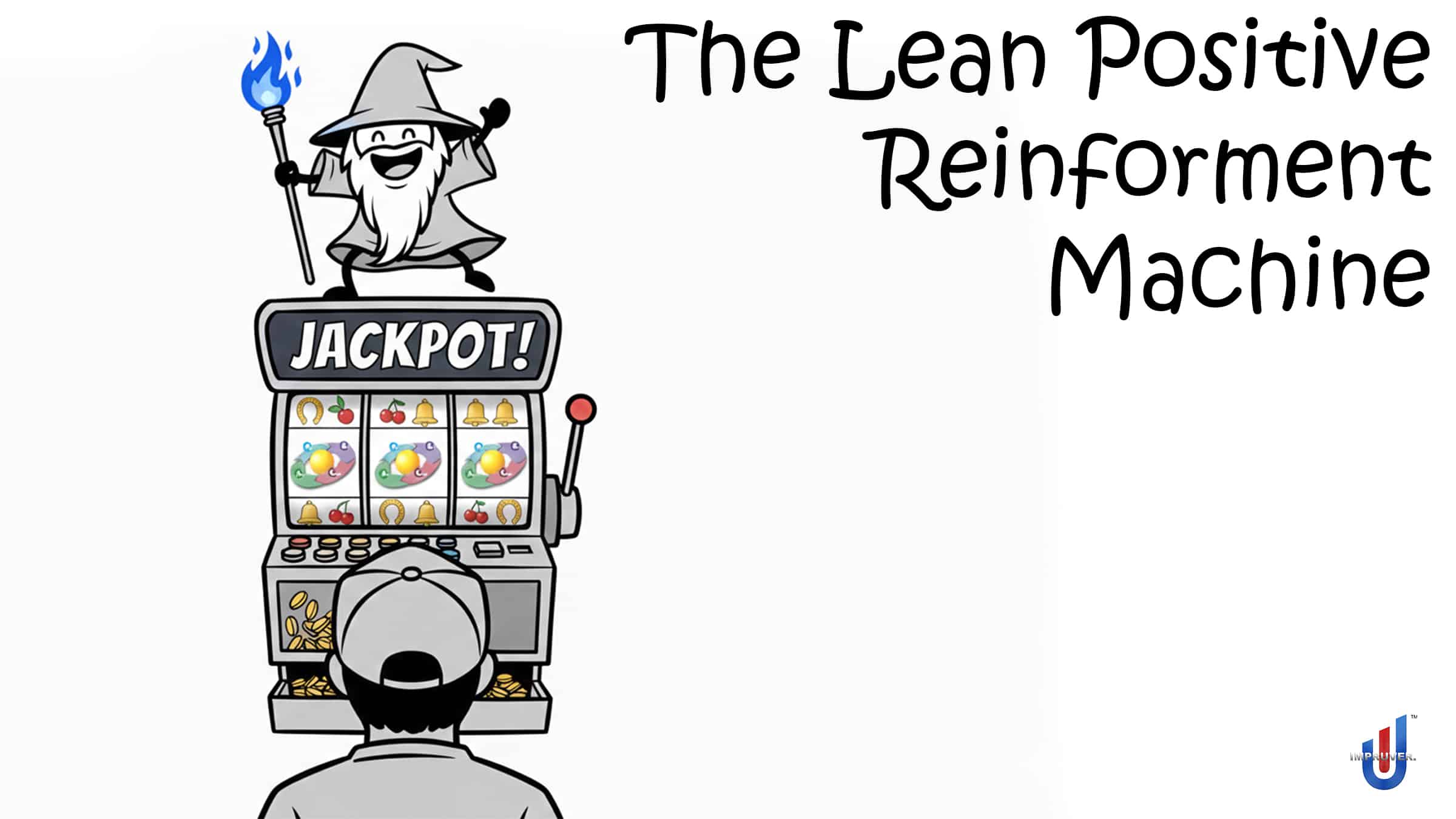
The alternative? Lean Dopamine.
It is time to stop managing by fear and start leading by “leveling up”. By applying the mechanics of gamification, we can fulfill the fundamental human needs for autonomy, mastery, and purpose.
When we adopt a “co-op mode” mentality and reward the team rather than isolating individuals, we stop idea hoarding, foster true collaboration, and turn waste into a common enemy.
I just published a comprehensive breakdown on how to architect this neurochemical shift in your organization, complete with strategies to transform your shop floor from a sterile lab into a high-performance arena.
Read the full article here and learn how to close the gratification gap: 🔗 https://impruver.com/lean-dopamine-gamifying-continuous-improvement/
impruver.com
Lean Dopamine - Gamifying Continuous Improvement - Impruver.com
For decades, we have approached Continuous Improvement (CI) as a technical challenge. We have treated it as a management problem to be solved through rigid […]